
Field notes
LiFePO4 vs AGM vs Flooded Lead-Acid: Which Battery for Off-Grid?
August 9, 2026
LiFePO4 vs AGM vs Flooded Lead-Acid: Which Battery for Off-Grid?
Your battery bank is the single most expensive line item in an off-grid system, and the chemistry you choose affects almost everything else — how many usable amp-hours you actually get, how long the bank lasts, how much it weighs, and what it costs upfront versus over its lifetime. Here's how the three most common options stack up.
The short answer
- LiFePO4 (lithium iron phosphate) — highest upfront cost, but the best usable capacity, longest lifespan, and lightest weight. The default choice for most new off-grid builds today.
- AGM (absorbent glass mat) lead-acid — a middle ground. Sealed, maintenance-free, and cheaper than lithium, but with roughly half the usable capacity and a fraction of the cycle life.
- Flooded lead-acid — the lowest upfront cost, but needs regular maintenance (checking and topping off electrolyte), must be installed with ventilation, and has the same capacity and lifespan limitations as AGM.
Usable capacity: why "100Ah" doesn't mean 100Ah
This is the number that catches people off guard. A battery's rated capacity and its usable capacity are not the same thing, because lead-acid chemistries degrade quickly if you regularly drain them past a certain point.
- LiFePO4 can typically be discharged to around 90% of its rated capacity without meaningfully shortening its life — a 100Ah lithium battery gives you roughly 90Ah to actually use.
- AGM and flooded lead-acid are generally limited to about 50% depth of discharge for reasonable longevity — that same rated 100Ah battery only gives you about 50Ah before you're accelerating its wear.
In practice, this means a lead-acid bank needs close to double the rated capacity of a lithium bank to deliver the same amount of usable daily power — which changes the math on both cost and physical space more than the sticker price alone suggests.
Cycle life: the real cost-per-use comparison
- LiFePO4: 3,000+ charge cycles is a common baseline for quality cells, with some rated well beyond that. At one cycle a day, that's years of daily use before capacity meaningfully fades.
- AGM / Flooded: around 500 cycles is typical. At one cycle a day, that's well under two years before the bank needs replacing.
This is where lithium's higher sticker price often reverses over the system's lifetime — you may replace a lead-acid bank three or four times over the period a single LiFePO4 bank keeps running, and each replacement carries its own cost and hassle.
Weight and size
Lithium batteries are meaningfully lighter than lead-acid for the same capacity, which matters most for portable and mobile rigs — vans, RVs, boats, and trailers — where every pound affects payload and fuel economy. For a stationary cabin or home installation, weight matters less, though the smaller physical footprint of lithium still helps if space is tight.
Maintenance and safety
- LiFePO4 is sealed and maintenance-free, and the chemistry itself is far more thermally stable than other lithium chemistries (like the ones in some consumer electronics), which is part of why it's become the standard for off-grid use.
- AGM is also sealed and maintenance-free — a genuine advantage over flooded lead-acid if you want the lower cost of lead-acid without the upkeep.
- Flooded lead-acid requires periodic checks of electrolyte levels, must be installed upright with adequate ventilation (it can off-gas hydrogen while charging), and is the least forgiving option if neglected.
Which one fits your build
- Tight budget, occasional/backup use, willing to do maintenance: flooded lead-acid is the cheapest way to get a working system, especially for infrequent use where cycle life matters less.
- Budget-conscious but want maintenance-free: AGM splits the difference — sealed like lithium, priced like lead-acid, but still capped at roughly 50% usable capacity and a shorter lifespan.
- Daily use, mobile rig, or want to size the bank once and not revisit it: LiFePO4 is worth the upfront cost for most off-grid builds today — the usable capacity and cycle life advantages compound fast once you're cycling the battery regularly.
Not sure how much usable capacity you actually need? The off-grid calculator factors in your chemistry choice automatically — pick lithium, AGM, or flooded lead-acid and it recalculates your battery bank size based on real usable depth of discharge, not just rated capacity.
Gear for this setup
Picks that match what this guide covers.
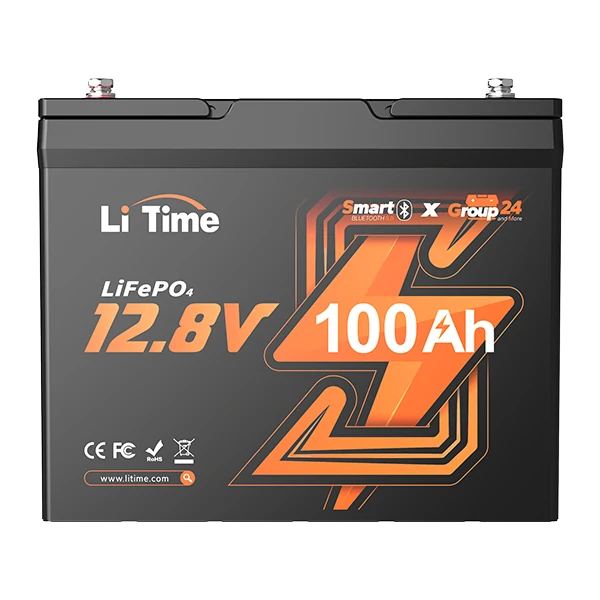
Group 24 case with Bluetooth monitoring — the usual 100Ah swap for a van or small cabin bank.
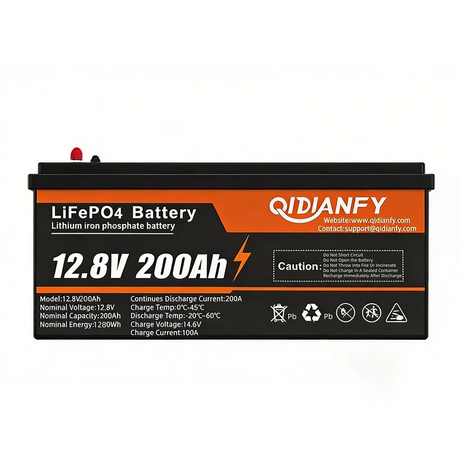
Value mid-size bank — its 200A BMS runs a bigger inverter than most 100Ah units.
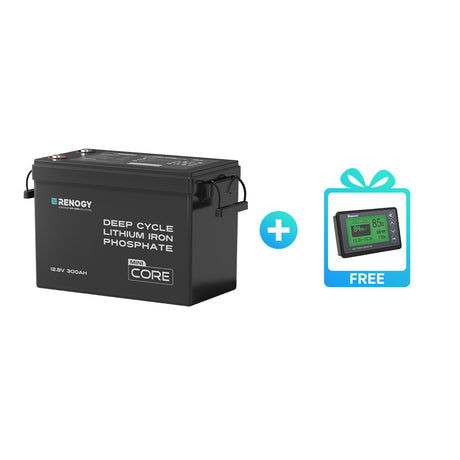
Compact 300Ah case with low-temperature cut-off — a big cabin bank without the rack footprint.
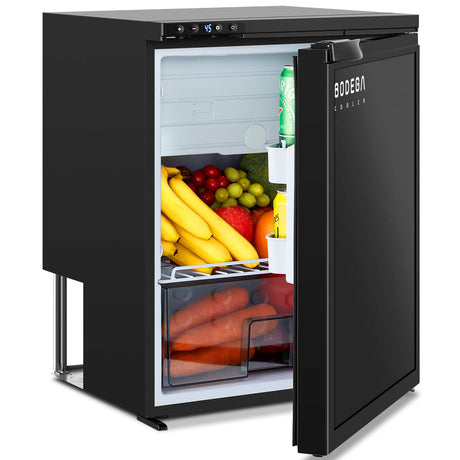
A galley fridge rather than a cooler: 49L fridge plus a 15.8L freezer, reversible door, 45 dB — mounts into a van or RV cabinet (frame sold separately).
Affiliate disclosure: GetWattLogic earns a commission on purchases made through these links, at no extra cost to you.