
Field notes
How Long Will a 100Ah Battery Run a 12V Fridge? (Real-World Numbers)
September 12, 2026
"How long will a 100Ah battery run my 12V fridge?" is one of the first questions every van and boat owner asks — and the answer almost everyone gives online is wrong by a factor of two. People quote the label wattage, ignore the compressor's duty cycle, forget the inverter loss, and end up surprised when a "50-hour" battery dies at 14 hours.
Here's the honest runtime math for the most common off-grid fridge batteries.
The one fact that changes everything: compressors cycle
A 12V compressor fridge doesn't run continuously. The compressor only kicks on when the thermostat calls for cooling — typically 35–50% of the time in a 70°F van, less at night, more in direct sun.
So a fridge "rated" at 60W average draw actually consumes:
- 60W × 0.4 duty cycle = 24W average over 24 hours
- 24W × 24 hours = ~580 Wh/day
That's the real number for an efficient 12V compressor fridge (Nova Kool, Dometic, Whynter, Isotherm) in mild weather. A cheap "mini fridge" with a 120V compressor running through an inverter is closer to 800–1,100 Wh/day — the inverter's idle draw plus the less-efficient compressor eat you alive.
What a 100Ah battery actually holds
Battery capacity in amp-hours is only useful once you convert it to watt-hours — the unit your appliances actually consume.
Usable Wh = Ah × Voltage × Usable DoD
For the two common chemistries:
| Battery | Ah | Nominal V | Chemistry | Usable DoD | Usable Wh |
|---|---|---|---|---|---|
| Lead-acid (AGM/flooded) | 100 | 12V | 50% max | 50% | ~600 Wh |
| LiFePO4 | 100 | 12V | 90% | 90% | ~1,080 Wh |
A 100Ah lead-acid gives you 600 usable Wh. A 100Ah LiFePO4 gives you 1,080 usable Wh — nearly double, because you can safely discharge lithium to 10% while lead-acid shouldn't go below 50%. This is why LiFePO4 has taken over the off-grid market. See our LiFePO4 vs AGM vs flooded lead-acid guide for the full chemistry comparison.
The runtime table
Using the realistic 580 Wh/day consumption for an efficient 12V compressor fridge, here's how long each 100Ah battery lasts on a single charge:
| Battery | Usable Wh | Runtime (fridge only) |
|---|---|---|
| 100Ah lead-acid | ~600 Wh | ~25 hours (just over a day) |
| 100Ah LiFePO4 | ~1,080 Wh | ~45 hours (just under 2 days) |
Now the real-world caveats that shorten this:
- Hot van / direct sun: duty cycle jumps to 60–70%, consumption rises to ~900 Wh/day → 100Ah LiFePO4 lasts ~28 hours
- Cold night / well-insulated: duty cycle drops to 25%, consumption falls to ~350 Wh/day → 100Ah LiFePO4 lasts ~74 hours (3 days)
- Fridge opened often / stocked with warm food: add 20–30% to consumption
The inverter penalty (don't pay it)
If your fridge is a 12V DC compressor fridge, run it on 12V directly. Don't invert to 120V AC and back. A small inverter wastes 10–20% of your energy as heat, even when the fridge's compressor is off — the inverter's idle draw runs 24/7.
A 120V mini fridge through an inverter is the worst-case scenario: the inverter's idle draw alone can exceed the fridge's cooling load on a cool night. Stick with 12V compressor fridges for van and boat builds.
What if you also run other loads?
Nobody runs just a fridge. A realistic van load profile adds lights (~30 Wh/day), a phone charge (~15 Wh), a fan (~100 Wh), maybe a laptop charge (~130 Wh). Call it ~250 Wh/day of non-fridge load on top of the fridge.
Revised runtime, fridge + basic loads:
| Battery | Usable Wh | Daily draw (fridge + basics, ~830 Wh) | Runtime |
|---|---|---|---|
| 100Ah LiFePO4 | 1,080 Wh | 830 Wh/day | ~1.3 days |
| 200Ah LiFePO4 | 2,160 Wh | 830 Wh/day | ~2.6 days |
| 300Ah LiFePO4 | 3,240 Wh | 830 Wh/day | ~3.9 days |
Most van builders land on 200–300Ah of LiFePO4 for exactly this reason — it gives you 2–4 days of autonomy with a fridge and basics, which is enough to bridge typical cloudy spells when paired with solar. See our solar panels for 100Ah / 200Ah / 400Ah batteries guide for the recharging side of this.
How to actually measure your fridge's draw
Manufacturer labels are unreliable. The only way to know your real number is to measure it:
- Buy a DC power meter / coulomb counter (~$30, Victron BMV or a cheap Amazon equivalent).
- Reset the counter at full charge.
- Let the fridge run 24 hours with no other loads.
- Read the total Ah consumed.
Multiply by 12V to get Wh/day. Most people are surprised — the number is usually lower than the label suggests, which means your battery will last longer than the online calculators told you.
Sizing a battery for a fridge — the short version
- Find your fridge's daily Wh (measure it, or estimate ~580 Wh for an efficient 12V compressor fridge).
- Add your non-fridge daily Wh (~250 Wh for basics).
- Pick your days of autonomy (2 days minimum for solar, 3 for cloudy climates).
- Battery Ah = (Daily Wh × Days) ÷ (12V × 0.9 for LiFePO4)
For 830 Wh/day and 2 days autonomy with LiFePO4: (830 × 2) ÷ (12 × 0.9) = 154Ah → round up to a 200Ah LiFePO4 battery.
If you want the full system math — battery + panel + inverter sized together for your exact appliances — the GetWattLogic calculator does it in about two minutes. For specific batteries that match this profile, see the Recommended Gear page.
Gear for this setup
Picks that match what this guide covers.
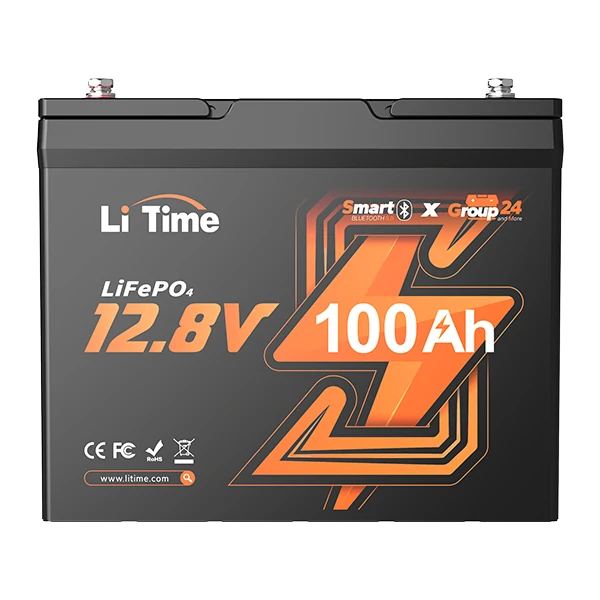
Group 24 case with Bluetooth monitoring — the usual 100Ah swap for a van or small cabin bank.
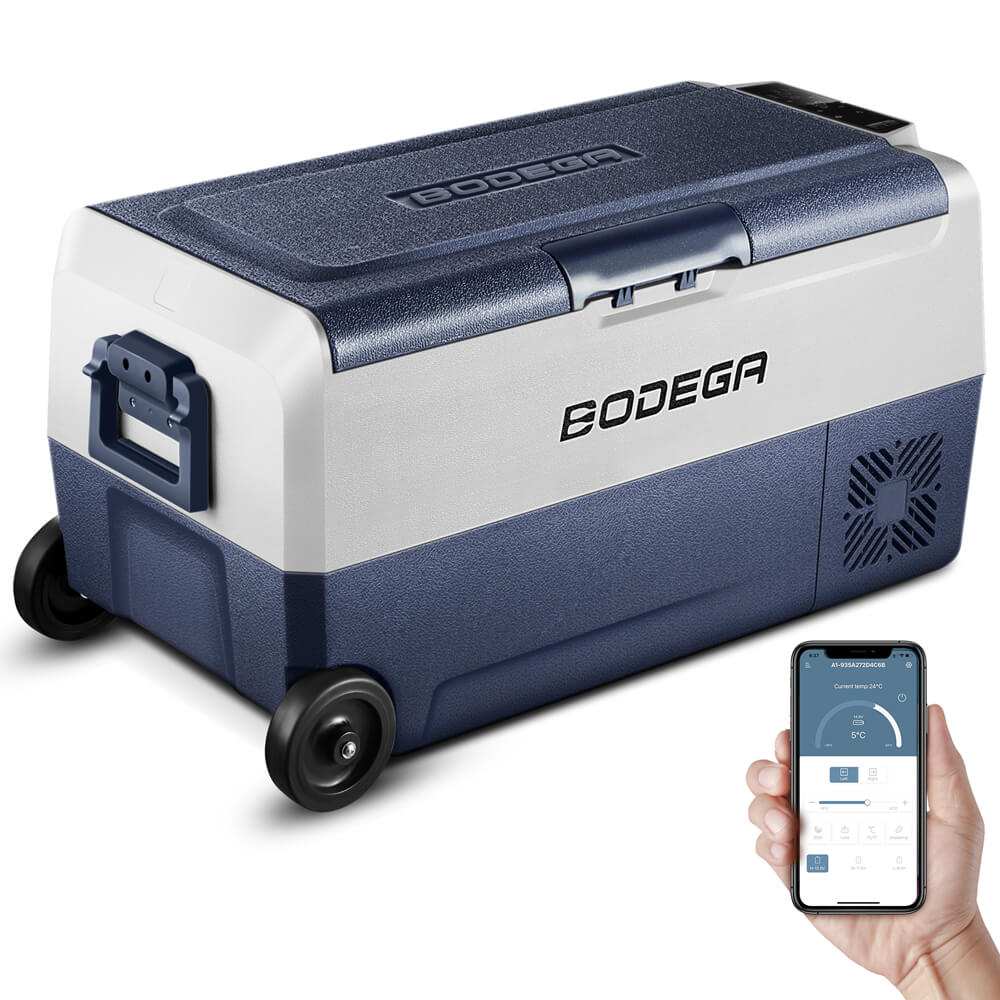
Maker rates it under 45W, with daily consumption kept below 1 kWh — the realistic small-rig figure to size a bank against.
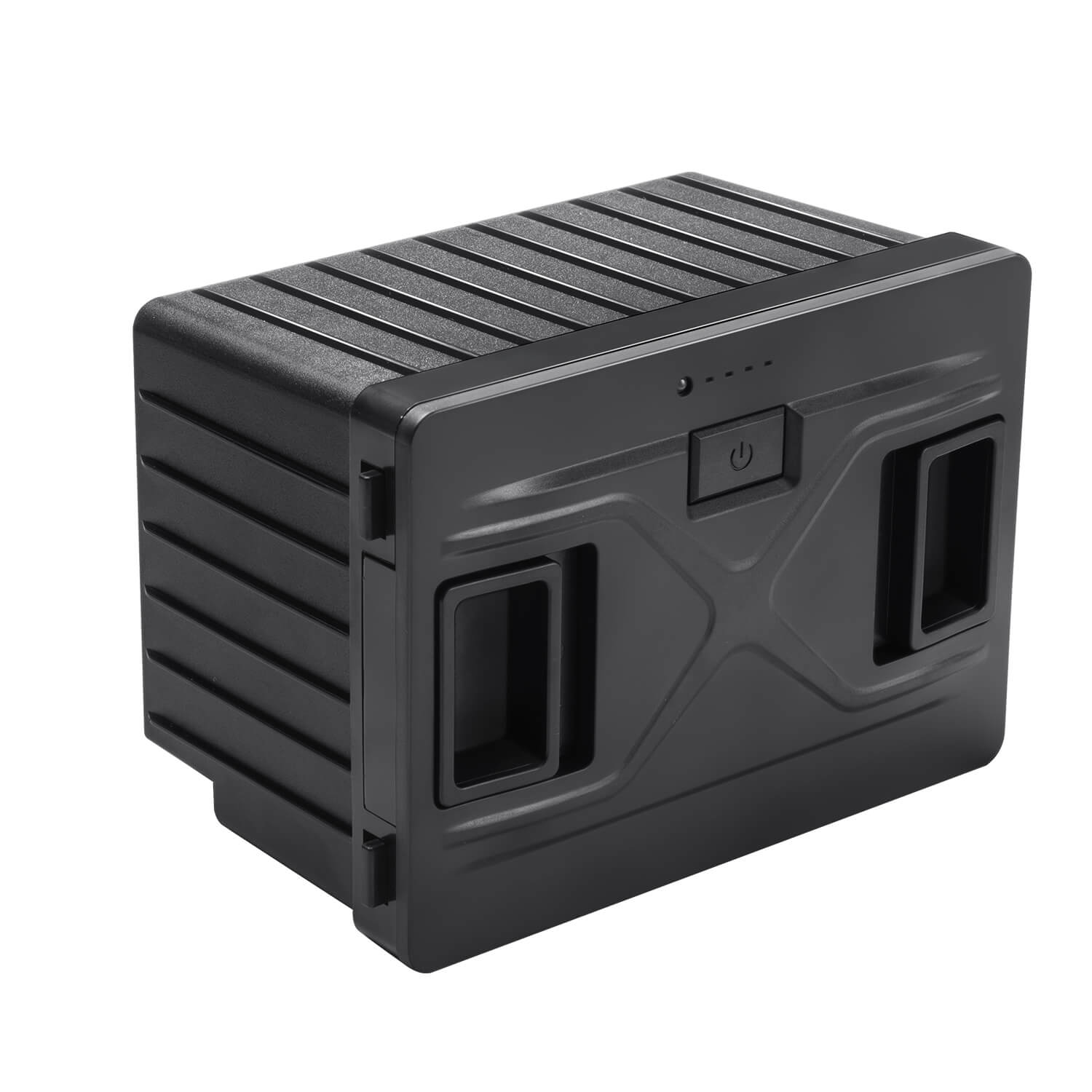
Fits their TWW/TAW/RTW/WD/P fridges, not the T-series or CR65 — runs a 12V fridge 4–10 hrs with no vehicle power and recharges from a 50W panel. Not a house bank.
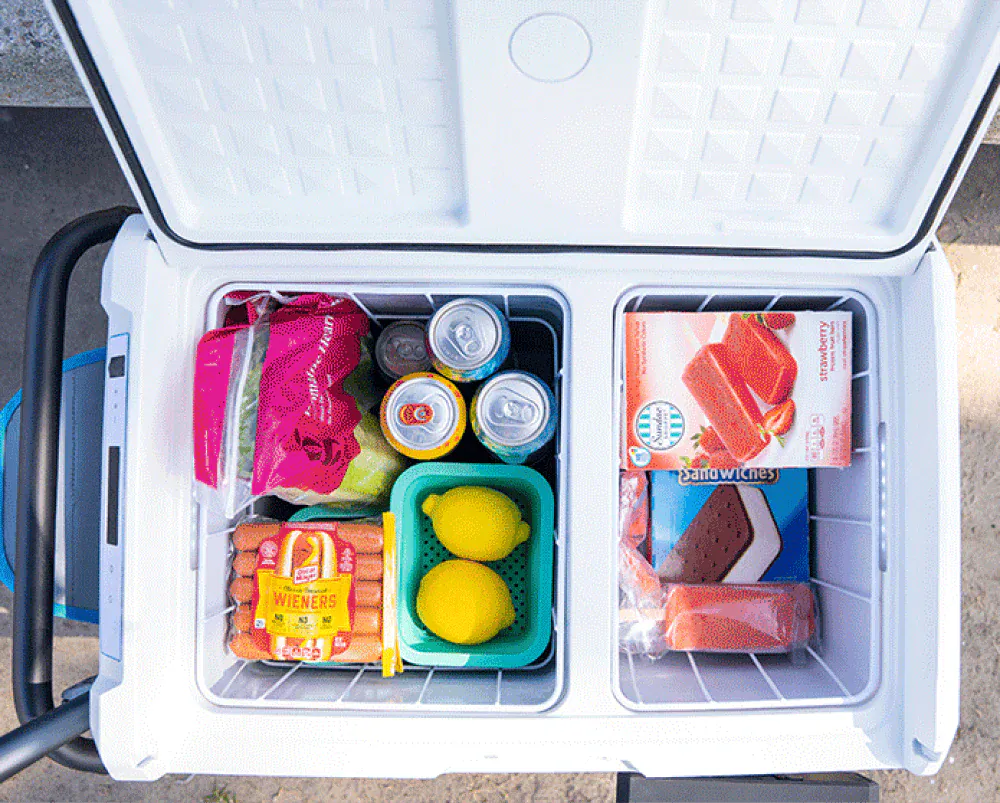
Solar-powered cooler that runs off your battery bank — keeps food cold day and night.
Affiliate disclosure: GetWattLogic earns a commission on purchases made through these links, at no extra cost to you.