
Field notes
How Many Solar Panels Do You Need for a 100Ah, 200Ah, or 400Ah Battery?
August 9, 2026
How Many Solar Panels Do You Need for a 100Ah, 200Ah, or 400Ah Battery?
If you're building an off-grid system — for a van, RV, cabin, or tiny home — the battery-to-panel ratio is the single most common sizing question, and it's easy to get wrong in both directions. Undersize your array and your battery never fully recharges. Oversize it and you've spent money on panels your battery can't absorb.
Here's the short version, followed by the math so you can adjust for your own situation.
Quick reference
| Battery bank | Usable capacity (LiFePO4) | Recommended solar array | Typical recharge time |
|---|---|---|---|
| 100Ah @ 12V | ~1,152Wh | 200–300W | 4–6 hours |
| 200Ah @ 12V | ~2,304Wh | 400–600W | 4–6 hours |
| 400Ah @ 12V | ~4,608Wh | 800W–1,200W | 4–6 hours |
These figures assume LiFePO4 chemistry (roughly 90% usable capacity), 4 peak sun hours, and a full recharge from about 20% state of charge. If your battery is AGM or flooded lead-acid, usable capacity drops to around 50% — you'll want a similarly sized array but plan for more conservative daily draw, since you can't safely cycle as deep.
The math behind it
The formula is straightforward:
Solar watts needed = Battery usable Wh ÷ (peak sun hours × system efficiency)
A reasonable efficiency factor to use is 0.75, which accounts for real-world losses — wiring, temperature derating, imperfect panel angle, and charge controller conversion loss. Solar panels rarely produce their full rated output in the field, so building in this buffer keeps your estimate honest.
Worked example — 200Ah battery, 12V, LiFePO4:
- Usable capacity: 200Ah × 12V × 0.9 (DoD) = 2,160Wh
- At 4.5 peak sun hours and 0.75 efficiency: 2,160 ÷ (4.5 × 0.75) = 640W of solar
That's why a 200Ah bank commonly pairs with a 400–600W array — the range accounts for regional sun hours varying between 3 hours (cloudy northern climates) and 6 hours (sunbelt states).
Why peak sun hours matter more than panel wattage alone
A 400W array in Arizona and a 400W array in Washington State are not the same system. Peak sun hours — not daylight hours — measure how much usable solar energy an area gets per day, and they can vary by a factor of two across the US. If you're in a lower-sun region, you either need a larger array to hit the same daily recharge, or you need to accept a longer recharge window and size your battery bank for more autonomy (backup days without sun) to compensate.
Battery chemistry changes the equation
- LiFePO4 (lithium): ~90% depth of discharge, meaning nearly all rated capacity is usable. This is why lithium systems can run smaller physical battery banks for the same usable energy — and why most sizing guides (including this one) default to it.
- AGM / flooded lead-acid: ~50% depth of discharge is the safe ceiling for lifespan. A "200Ah" lead-acid battery only gives you about 1,200Wh of usable energy — roughly half of an equivalent lithium bank — so solar needs and battery bank size don't scale the same way.
A faster way to size your exact setup
The ratios above are solid starting points, but they're generic. Your actual number depends on your specific devices, how many hours per day you run them, your regional sun hours, and how many no-sun backup days you want.
Use the free Off-Grid Energy Calculator → to build your exact loadout — add your devices, set your sun hours and autonomy target, and get a battery, panel, inverter, and generator spec sized to your actual usage, not a generic table.
Figures in this article are rule-of-thumb ranges based on common industry sizing practices, not a single manufacturer's spec. Always verify against your specific equipment's datasheet before purchasing or installing.
Gear for this setup
Picks that match what this guide covers.

Foldable suitcase, USB+DC, ETFE-coated — pairs with Jackery stations.
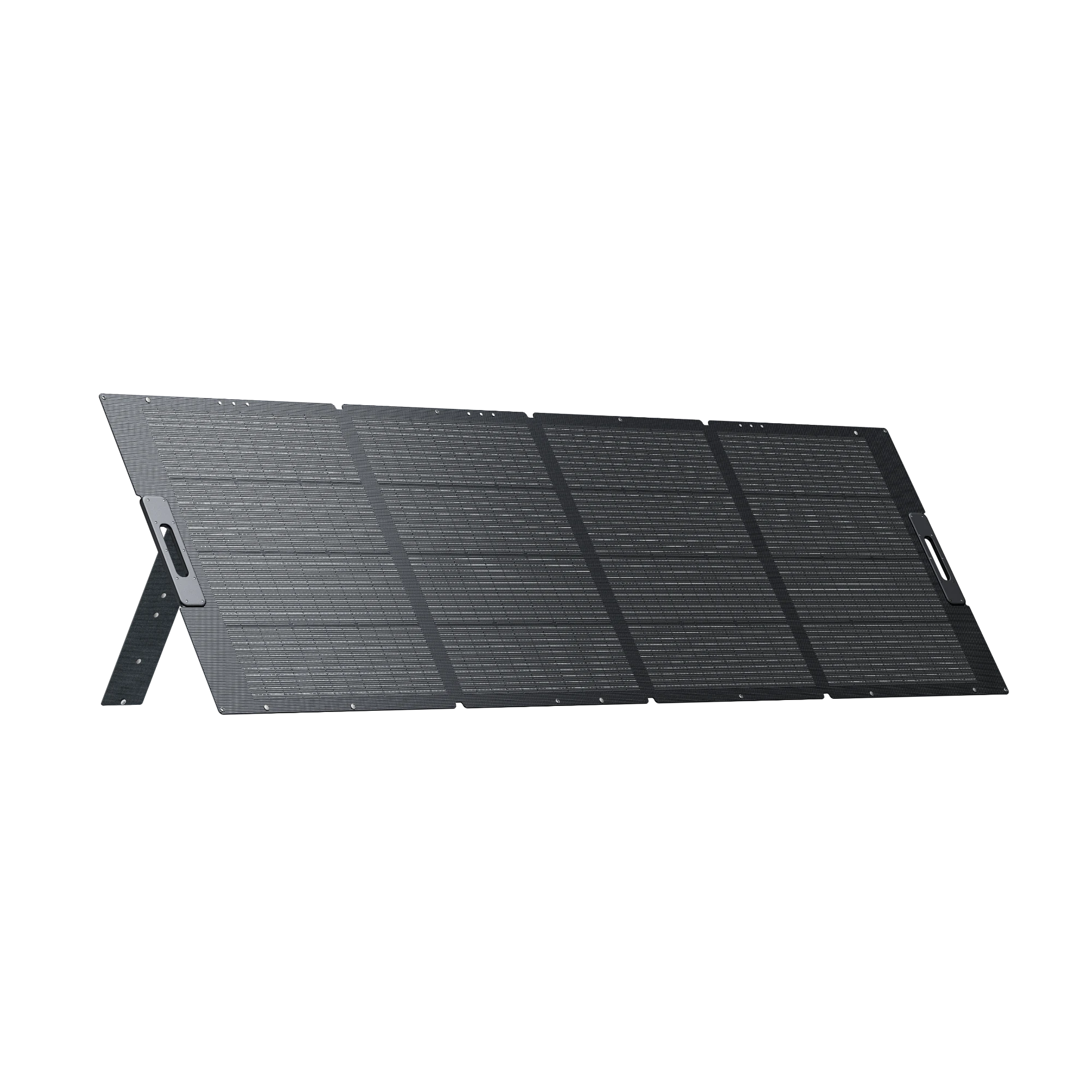
Weatherproof rigid panel for roof/ground arrays on cabins.
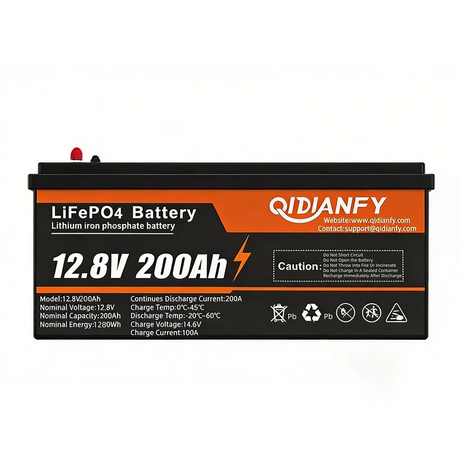
Value mid-size bank — its 200A BMS runs a bigger inverter than most 100Ah units.
Affiliate disclosure: GetWattLogic earns a commission on purchases made through these links, at no extra cost to you.