
Field notes
What Size Inverter Do You Need? Fridge, Microwave, CPAP, and More
August 9, 2026
What Size Inverter Do You Need? Fridge, Microwave, CPAP, and More
An inverter's job is simple to state and easy to undersize by accident: it converts your battery's DC power into the AC power your appliances actually run on. Get the wattage wrong and the symptom isn't subtle — the appliance won't start, or it'll shut off mid-cycle.
The catch is that "watts" on an appliance's label isn't the whole story. Here's how to size an inverter correctly, appliance by appliance.
Running watts vs. surge watts
Every inverter has two ratings:
- Continuous (running) watts — what it can supply indefinitely
- Surge (peak) watts — what it can supply for a few seconds, usually 2-5x the running rating
Motors — compressors, pumps, fans — draw a large surge on startup, then settle down to a much lower running draw. A fridge that runs at 55W can surge to 120W+ the instant its compressor kicks on. If your inverter's surge rating can't cover that spike, the fridge simply won't start, even though its running wattage is well within spec.
Rule of thumb: size your inverter's continuous rating to your total simultaneous running load, and its surge rating to your single largest surge device plus everything else already running.
Common appliances — running and surge watts
| Appliance | Running watts | Surge watts | Notes |
|---|---|---|---|
| 12V compressor fridge | ~55W | ~120W | Surges every time the compressor cycles, not just at power-on |
| CPAP machine | ~40W | ~40W | No motor, no surge — but check for a heated humidifier, which adds draw |
| Laptop | ~65W | ~65W | Minimal surge |
| WiFi router / Starlink | ~50W | ~50W | Continuous draw, no surge |
| Water pump | ~60W | ~150W | Short surge, but frequent if you're running water often |
| Microwave | ~1,200W | ~1,800W | One of the biggest single loads in a typical loadout |
| Coffee maker | ~1,000W | ~1,000W | Resistive heating element, minimal surge beyond running watts |
| Hair dryer | ~1,500W | ~1,500W | Same — resistive load |
| Power tools (drill, saw) | ~800W | ~1,600W | Surge varies significantly by tool and task |
| RV roof A/C (13.5k BTU) | ~1,500W | ~3,300W | The single largest common off-grid load — sizes many systems on its own |
| Mini-split heat pump | ~800W | ~2,200W | More efficient than resistive heat, but still surge-heavy on startup |
| Electric space heater | ~1,500W | ~1,500W | Resistive — draws its full rating the instant it's on |
(Figures are typical ranges; always check your specific unit's nameplate rating, usually on a sticker on the appliance itself or in the manual.)
Worked example
Say your simultaneous loadout is: fridge running (55W) + router (50W) + laptop (65W), and then a microwave (1,200W running / 1,800W surge) kicks on while everything else is already running.
- Continuous rating needed: 55 + 50 + 65 + 1,200 = 1,370W minimum — round up to a common inverter size like 1,500W or 2,000W for headroom.
- Surge rating needed: (55 + 50 + 65) + 1,800 = 1,970W — most 1,500-2,000W inverters carry enough surge headroom (often 2x continuous) to clear this, but it's worth checking the specific unit's surge spec rather than assuming.
This is exactly the kind of calculation that's easy to get wrong by eyeballing it — a device that seems small on paper (a fridge) can still be the thing that pushes your surge requirement over the edge if it cycles on at the same moment as something bigger.
A note on heating and cooling loads
Climate control — A/C, heat pumps, space heaters — dominates inverter and battery sizing more than any other category. If your loadout includes any of these, they're very likely your single largest running and surge load, and they run for hours at a time rather than minutes. It's worth sizing your inverter and battery bank around your climate control device first, then adding everything else on top, rather than the reverse.
Size it to your actual loadout, not a guess
Appliance specs vary by brand and model, and what's "running simultaneously" depends entirely on your habits — do you run the microwave while the A/C is on, or never at the same time? Small assumptions like this change your inverter size by hundreds of watts.
Use the free Off-Grid Energy Calculator → — add your actual devices from a preset list (with running and surge watts built in), and get an inverter continuous and surge rating calculated automatically from your real loadout.
Figures in this article are rule-of-thumb ranges based on common industry sizing practices, not a single manufacturer's spec. Always verify against your specific equipment's nameplate rating before purchasing or installing.
Gear for this setup
Picks that match what this guide covers.

Current Anker ~2kWh station — fast AC+solar charge, expandable to 4kWh; direct rival to Jackery 2000 v2.
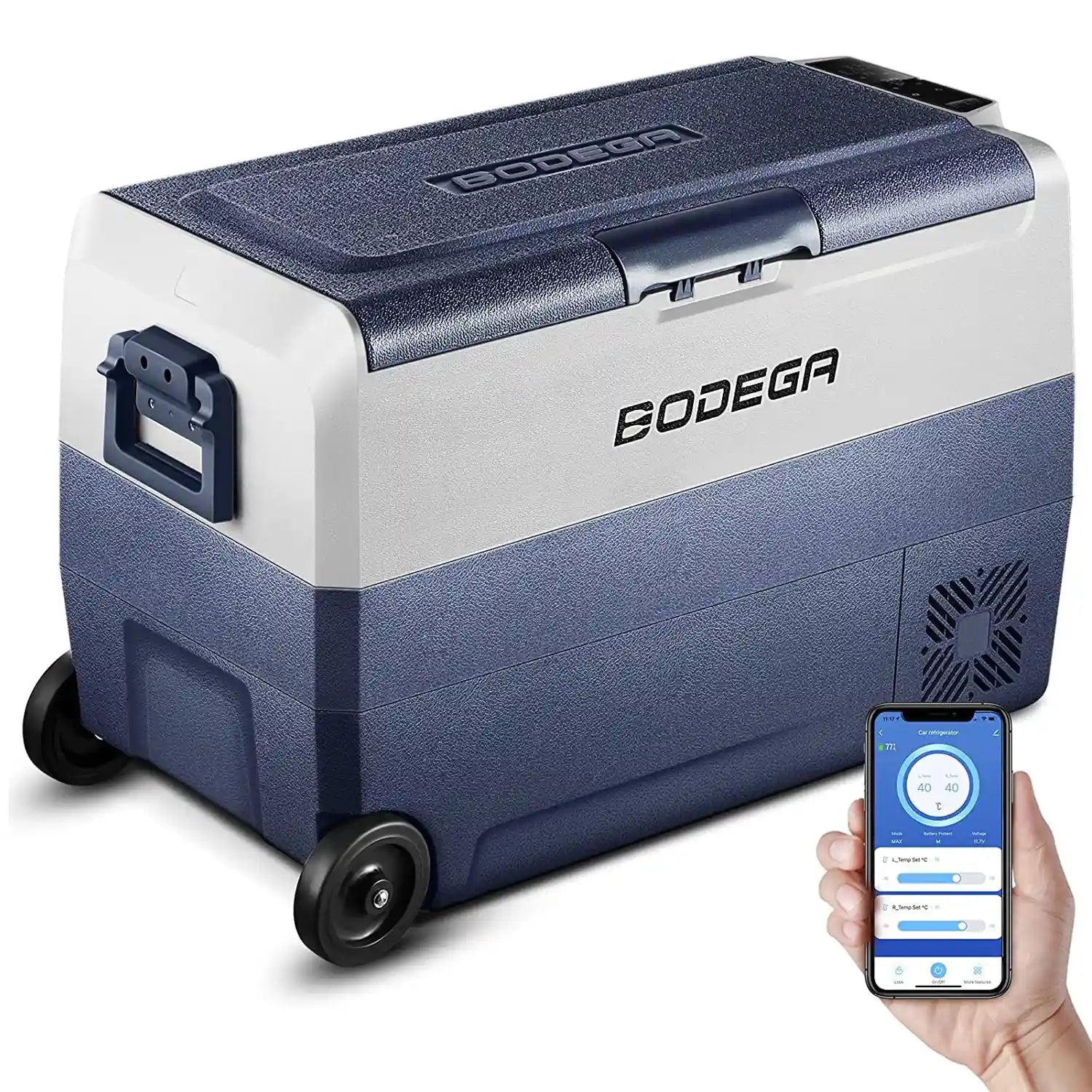
Their most-reviewed unit — the divider pulls out to make one 50L zone, with wheels and a retractable handle for loading in and out.
Affiliate disclosure: GetWattLogic earns a commission on purchases made through these links, at no extra cost to you.