
Field notes
Can a Portable Power Station Run a CPAP Machine All Night?
September 12, 2026
A CPAP machine is the single most common reason people buy their first portable power station — and it's also the scenario where a "500Wh" unit can leave you gasping at 3 a.m. The confusion comes from one number: the watt rating on the CPAP's label is not what it actually draws all night. Here's the real math.
What a CPAP actually consumes
A modern CPAP (ResMed AirSense 11, Philips DreamStation, etc.) draws roughly 40–60W at standard pressure (4–10 cmH₂O) with no humidifier and no heated tube. Add the heated humidifier on a cold night and you're at 90–130W. Add a heated tube and you're at 120–170W.
That's a 4x swing depending on settings. The label that says "100W max" is the ceiling, not the average.
For an 8-hour night, here's the realistic energy budget:
| Setting | Average draw | Energy for 8 hrs |
|---|---|---|
| CPAP only, no heat | ~50W | ~400 Wh |
| + heated humidifier | ~110W | ~880 Wh |
| + humidifier + heated tube | ~150W | ~1,200 Wh |
The number that actually matters: inverter overhead
CPAP power supplies are switching power supplies — they run fine on a pure sine wave inverter, but they draw a small continuous idle current from the power station even when the CPAP itself is between breaths. Budget an extra 15–20% on top of the table above for inverter conversion losses and standby draw.
So a heated-humidifier night realistically needs ~1,000–1,400 Wh of usable battery.
Sizing the power station
Portable power stations advertise total battery capacity, but you only get ~80% of it as usable energy (the rest is held in reserve to protect the lithium cells, plus inverter losses). So divide your nightly need by 0.8:
- No heat, mild night: 400 Wh / 0.8 = 500 Wh station (e.g. a 512Wh unit is enough)
- Heated humidifier, most nights: 1,000 Wh / 0.8 = 1,250 Wh station
- Heated humidifier + heated tube, cold nights: 1,400 Wh / 0.8 = 1,750 Wh station
This is why people buy a 500Wh unit, run the humidifier, and get 3 hours. The humidifier roughly doubles your battery requirement.
Turning it off isn't always a choice
If you have central sleep apnea or a high pressure setting, skipping the humidifier isn't just uncomfortable — it can dry out your airway enough that you pull the mask off in your sleep. For medical reliability, size for the heated configuration, not the optimistic one.
Runtime cheat sheet for common stations
Using a realistic 1,000 Wh nightly budget (humidifier on):
| Power station | Usable Wh | CPAP nights (humidifier) |
|---|---|---|
| Bluetti EB3A (268Wh) | ~215 | 0.2 (one night, no heat only) |
| Jackery Explorer 300 (293Wh) | ~235 | 0.2 |
| EcoFlow River 2 Max (512Wh) | ~410 | 0.4 |
| Bluetti AC60 (403Wh) | ~320 | 0.3 |
| Bluetti AC180 (1,152Wh) | ~920 | ~0.9 (one full night) |
| EcoFlow Delta 2 (1,024Wh) | ~820 | ~0.8 |
| Bluetti AC200L (2,048Wh) | ~1,640 | ~1.6 |
| EcoFlow Delta 2 Max (2,048Wh) | ~1,640 | ~1.6 |
For a single safe night with the humidifier on, you realistically want a station of 1,200Wh or larger. For two nights without recharging, jump to the 2,000Wh class.
Recharging during the day
If you're in a van or cabin with solar, the question shifts from "one big battery" to "can I refill overnight's draw during the day?" A 1,000Wh nightly draw, refilled during ~4 peak sun hours, needs ~250W of solar input — well within a single 200W panel + an MPPT controller on a clear day. See our solar panels for 100Ah / 200Ah / 400Ah batteries guide for the panel math.
The takeaway
- No humidifier: a 500Wh station gets you through the night.
- With humidifier: plan for ~1,000Wh/night, which means a 1,200Wh+ station.
- Off-grid / multi-night: pair the station with at least 200W of solar and size the battery for the humidifier-on case.
Before you buy, check your CPAP's actual draw with a kill-a-watt meter for one night — then size 25% above that number. And if you want the full system math (inverter, battery, panels) in one place, the GetWattLogic calculator does the whole sizing in about two minutes. For specific stations, our Recommended Gear page lists current models with live links.
Gear for this setup
Picks that match what this guide covers.
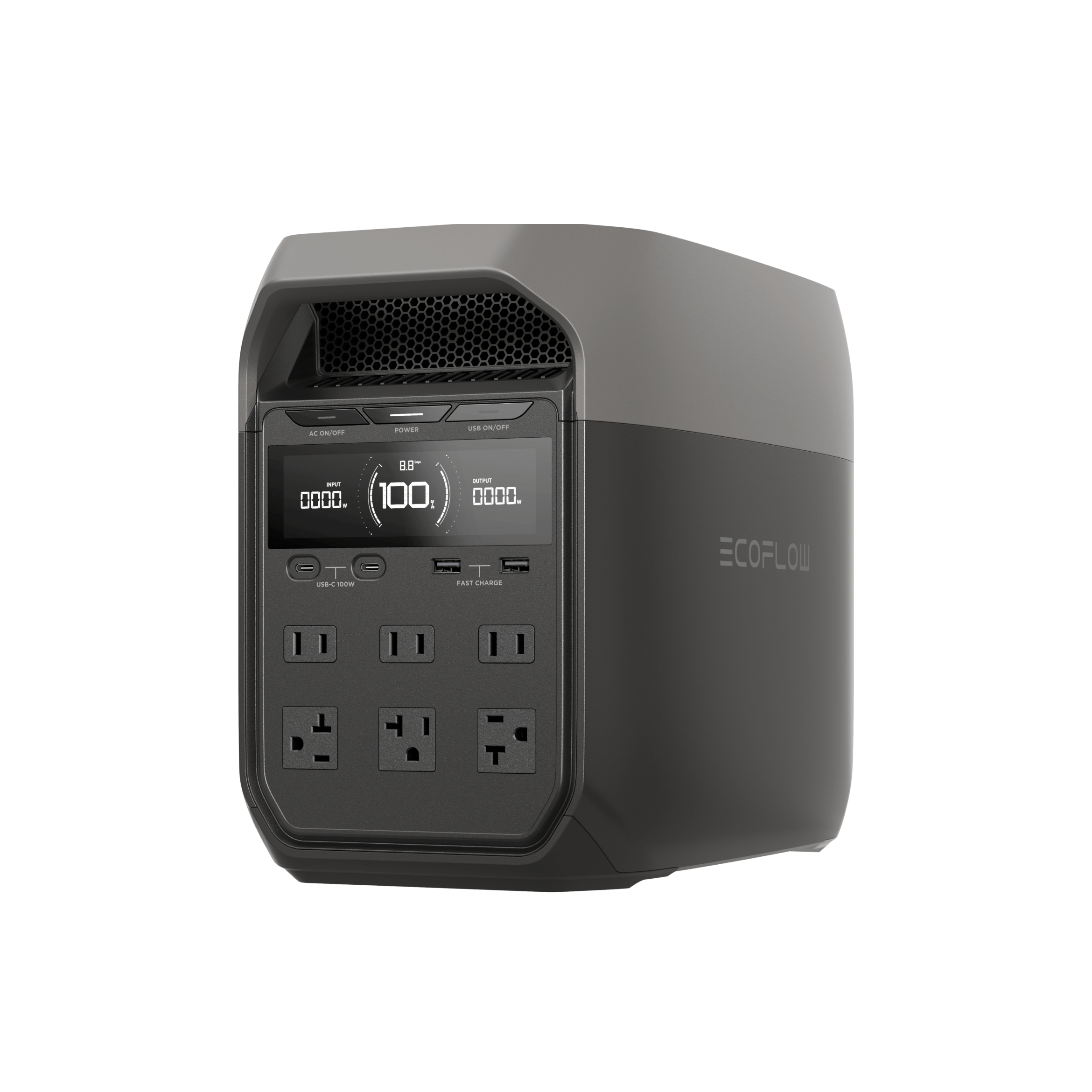
Fastest AC charge in class, expandable with extra batteries.

Lightest PowerMax — grab-and-go LiFePO4 value pick for small rigs and day trips.
Affiliate disclosure: GetWattLogic earns a commission on purchases made through these links, at no extra cost to you.