
Field notes
12V vs 24V vs 48V Van Electrical Systems: Which to Choose
September 12, 2026
Ask any van forum what voltage to run and you'll get three confident answers, all from people who built a different system. The truth is that the right voltage depends entirely on how much power you use per day — and most people pick wrong by copying the last build they saw.
This is the rule, up front, so you can skip the rest if you're in a hurry:
| Daily energy use | Recommended voltage |
|---|---|
| Under 1 kWh/day | 12V |
| 1–3 kWh/day | 24V |
| Over 3 kWh/day | 48V |
Here's why.
The core principle: watts = volts × amps
A 1,500W microwave draws 125 amps at 12V, 62 amps at 24V, or 31 amps at 48V. The copper wire you need to carry that current safely scales inversely with voltage. Double the voltage, halve the current, halve the wire thickness, roughly halve the cost of the cable.
This is the entire reason higher voltages exist for off-grid systems. They're not "better" in some mystical sense — they let you move the same amount of energy through thinner, cheaper, lighter wire.
Why 12V is still the default for vans
12V wins on compatibility, not efficiency. Almost every 12V appliance exists — fridges, lights, fans, water pumps, USB outlets, diesel heaters — and they're cheap because the RV and marine industries standardized on 12V decades ago.
If your total daily draw is under ~1 kWh (a fridge, some lights, a laptop charge, a fan), 12V is genuinely the right call. You don't need a big inverter, your wire runs are short, and the whole system is plug-and-play.
The van-build sweet spot for 12V: a 12V fridge, LED lighting, a Maxxair fan, a 12V TV, phone/laptop charging, and a small inverter (300–1,000W) for occasional AC use. This is 80% of van builds, and 12V is exactly right for them.
When 12V breaks down
12V stops working when your inverter starts pulling real current. A 2,000W inverter on a 12V battery bank is pulling 167 amps at full load. The cable to carry that safely over a 6-foot run is 4/0 AWG — thick as a garden hose, ~$5/foot, and you need two runs. The lugs, the busbar, the shunt — everything gets heavy, hot, and expensive.
Above ~1,000W of inverter, or above ~1 kWh/day of total use, you should be on 24V.
Why 24V is the van upgrade tier
24V is the sweet spot for medium van builds — the ones with an induction cooktop, a microwave, a coffee maker, or a real inverter running regularly. At 24V:
- A 2,000W inverter pulls 83 amps — half the wire thickness of 12V
- A 3,000W inverter pulls 125 amps — manageable on 2/0 AWG
- Your charge controller can handle twice the solar array on the same amperage rating
The tradeoff: 24V appliances are less common and pricier. Most people run 24V house bank + a 24V-to-12V step-down converter for their 12V loads (fridge, lights, fans). The converter is a ~$80–150 part, ~90% efficient, and it's worth it.
24V LiFePO4 batteries are now widely available as single 24V packs (not just 2x 12V in series), which simplifies the build. A 24V 100Ah battery holds 2,560 Wh — enough for 1.5–2 days for most van builds.
Why 48V belongs in big vans and tiny houses
48V is the voltage of server-rack batteries, and it's the cheapest per kWh of storage you can buy right now. A 48V 100Ah LiFePO4 server rack battery is ~5,120 Wh and often under $1,000 — less than half the per-Wh cost of a 12V battle-born equivalent.
48V makes sense when:
- Your daily use is over 3 kWh (tiny house, large van with A/C)
- You're running a 3,000W+ inverter regularly
- You want the cheapest battery storage per watt-hour
The tradeoff: almost nothing runs natively on 48V. You'll use a 48V inverter to 120V AC for everything, plus a 48V-to-12V converter for the small DC loads. This is fine for a stationary tiny house; it's a hassle in a van where space is tight and you're constantly adding 12V accessories.
The three numbers that decide your voltage
Don't pick a voltage by vibes. Pick it from these three numbers:
- Your largest inverter wattage. Divide by system voltage to get amps. If amps > 150, you want higher voltage.
- Your longest cable run (battery to inverter). Long runs at high current need huge wire; raising voltage fixes it.
- Your daily Wh usage. Under 1k Wh = 12V. 1–3 kWh = 24V. Over 3 kWh = 48V.
If any one of those pushes you up a tier, go up. It's much easier to build a 24V system once than to upgrade a 12V system later — the inverter, battery, and charge controller all change together.
What doesn't change with voltage
- Solar panels are the same. A 200W panel is a 200W panel regardless of whether your battery is 12V, 24V, or 48V. The charge controller handles the mismatch.
- Inverter output is 120V AC either way.
- Your daily energy budget is the same — the voltage just changes how you move it.
A practical worked example
Van build: fridge, lights, fan, laptop charging, occasional microwave, coffee maker.
- Daily use: ~1.2 kWh/day
- Largest inverter: 1,500W (microwave + coffee maker occasionally)
- At 12V: 1,500W ÷ 12V = 125A — feasible but pushing 12V's limits
- At 24V: 1,500W ÷ 24V = 62A — comfortable, wire is half the thickness
Verdict: 24V. You get cheaper wire, a smaller charge controller, and headroom to add an induction cooktop later. You'll buy a 24V-to-12V converter for the fridge and lights (~$100) and never think about it again.
Don't overthink it
If you're under 1 kWh/day and your biggest load is a 12V fridge, stop reading and build a 12V system. The obsession with voltage in van forums is mostly people who built 48V systems they didn't need. Most vans are 12V. Most tiny houses should be 24V or 48V. The math is the only thing that decides — and the GetWattLogic calculator handles it for you, including recommending a system voltage from your actual load. Once you've picked, the gear page lists batteries and inverters by voltage class.
Gear for this setup
Picks that match what this guide covers.
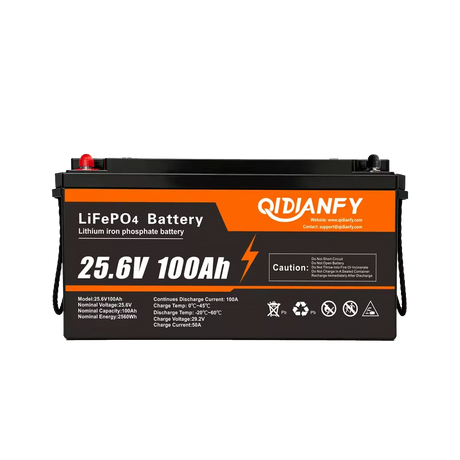
Their best-reviewed unit — a 24V bank in one box for mid-size cabin systems.
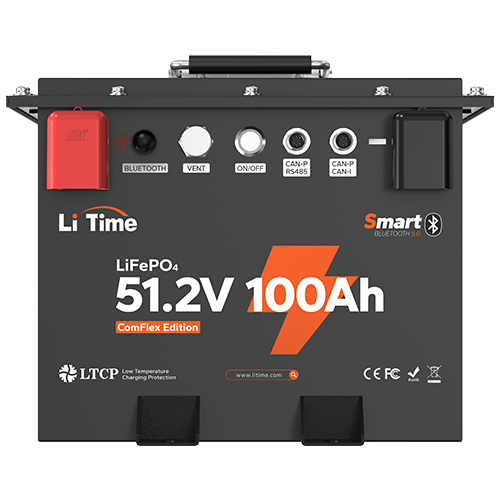
A whole 48V bank in one unit, with Bluetooth and Victron-compatible communication.

Current Anker ~2kWh station — fast AC+solar charge, expandable to 4kWh; direct rival to Jackery 2000 v2.
Affiliate disclosure: GetWattLogic earns a commission on purchases made through these links, at no extra cost to you.