
Field notes
How Much Solar Do I Need for a Tiny House? (With Realistic Load Examples)
September 12, 2026
Tiny houses are the hardest off-grid sizing problem there is. They have the appliance load of a small apartment (fridge, lights, laptop, water pump, maybe a microwave) but the roof area of a garden shed. People routinely under-size by 40% because they size for summer and forget that winter sun is a different animal.
This guide walks through a realistic 200 sq ft tiny house and the actual numbers you need.
Step 1 — your daily watt-hour budget
For a typical off-grid tiny house used by 1–2 people, here's a realistic load profile:
| Load | Watts | Hours/day | Wh/day |
|---|---|---|---|
| Efficient fridge (12V compressor) | 45 avg | 24 | 1,080 |
| LED lights (6 @ 7W) | 42 | 5 | 210 |
| Laptop + phone charging | 65 | 4 | 260 |
| Water pump (12V) | 60 | 0.5 | 30 |
| Vent fan (Maxxair) | 20 | 8 | 160 |
| Microwave (occasional) | 1,000 | 0.25 | 250 |
| Coffee maker / kettle | 1,200 | 0.2 | 240 |
| Router / Starlink | 30 | 10 | 300 |
| Total | ~2,530 Wh/day |
Call it 2.5 kWh/day with modest use. If you run an air conditioner, a space heater, or a desktop computer, add those in — the GetWattLogic calculator does this automatically and lets you drag in your exact appliances.
Step 2 — size the solar array for the worst month
The mistake everyone makes: dividing daily Wh by peak sun hours for summer. In December, most of the US gets 2–3 peak sun hours/day on a fixed array — half of summer. If you size for June, you'll be running a generator every cloudy week in January.
The formula:
Panel watts = (Daily Wh ÷ Peak sun hours) ÷ 0.7
The 0.7 accounts for charge controller losses, panel derating (heat, dust, aging), and the fact that "peak sun hours" is a theoretical average, not a daily guarantee.
For our 2,530 Wh/day tiny house in a 4 peak-sun-hour climate (most of the US in summer):
- Summer sizing: 2,530 ÷ 4 ÷ 0.7 = ~900W of panels
- Winter sizing (3 sun hours): 2,530 ÷ 3 ÷ 0.7 = ~1,200W of panels
A realistic, all-season tiny house array is 1,000–1,500W. If you can only fit 800W on the roof, plan on either a generator backup or running the fridge on propane in winter. See our solar sizing cheat sheet for the quick-reference version.
Step 3 — the battery bank
The battery has to carry you through cloudy periods. Two days of autonomy is the minimum sane target for off-grid; three is comfortable.
- 2 days of 2,530 Wh = 5,060 Wh of usable storage
LiFePO4 (lithium iron phosphate) is the default for tiny houses now — it's cheaper per usable cycle than lead-acid, survives 3,000+ cycles, and you can discharge to 90%. See our LiFePO4 vs AGM vs flooded lead-acid comparison.
At 12V: 5,060 Wh ÷ 12V = ~420Ah of LiFePO4 At 24V: 5,060 Wh ÷ 24V = ~210Ah of LiFePO4
A common, real-world configuration is two 280Ah 12V LiFePO4 batteries in parallel (~560Ah / ~6,700 Wh) — slightly oversized, which buys you a third cloudy day.
Step 4 — why 24V or 48V beats 12V for a tiny house
12V is fine for a van. It is not fine for a tiny house drawing 2.5+ kWh/day. The reason is wire thickness and inverter cost.
At 12V, your inverter drawing 2,000W pulls 167 amps. The copper cable to handle that without melting is the size of your thumb, costs a fortune, and still loses meaningful energy as heat. At 24V the same load is 83 amps. At 48V it's 42 amps — small, cheap cable.
For any tiny house over ~1,500Wh/day, move to 24V or 48V. The inverter, charge controller, and wire all get cheaper and lighter. Most modern LiFePO4 server-rack batteries (the cheapest per kWh right now) are 48V.
Step 5 — the inverter
Size the inverter to the largest simultaneous surge, not the daily average. If your microwave (1,000W) and coffee maker (1,200W) could both run, you need a 2,500–3,000W pure sine wave inverter with a surge rating of at least 2x that.
Pure sine wave is non-negotiable — anything with a motor (fridge compressor, water pump) will buzz, overheat, or die early on modified sine. See our inverter sizing guide for appliances.
The realistic tiny-house solar system
Putting it all together for a 2.5 kWh/day tiny house:
- Panels: 1,200–1,500W (six 200W panels, or four 350W)
- Battery: ~6 kWh LiFePO4 at 24V or 48V
- Inverter: 3,000W pure sine wave, 48V if your battery is 48V
- Charge controller: MPPT, sized 30A above your panel array short-circuit current
- Backup: a small inverter generator for 3+ day cloudy stretches
Total parts cost as of 2026: $4,000–$6,500 depending on whether you go DIY or pre-built.
The mistake that ends tiny-house solar projects
Almost every tiny house that "goes back on grid power" within a year made the same mistake: they sized the solar for summer, not winter, and they didn't have enough roof for the winter array. If you're designing a tiny house for solar, design the roof for the panels first, then build the house under it. A south-facing shed roof with a 35–40° tilt, sized for 1,500W of panels, will outperform a fancy 800W array on a flat roof every single December.
If you want the exact numbers for your appliances and climate, run them through the off-grid calculator — it sizes panels, battery, and inverter together so you can't forget a step. For the actual hardware, the Recommended Gear page lists current models that match these specs.
Gear for this setup
Picks that match what this guide covers.

Top-rated 2026, scales to mid cabins; LiFePO4.
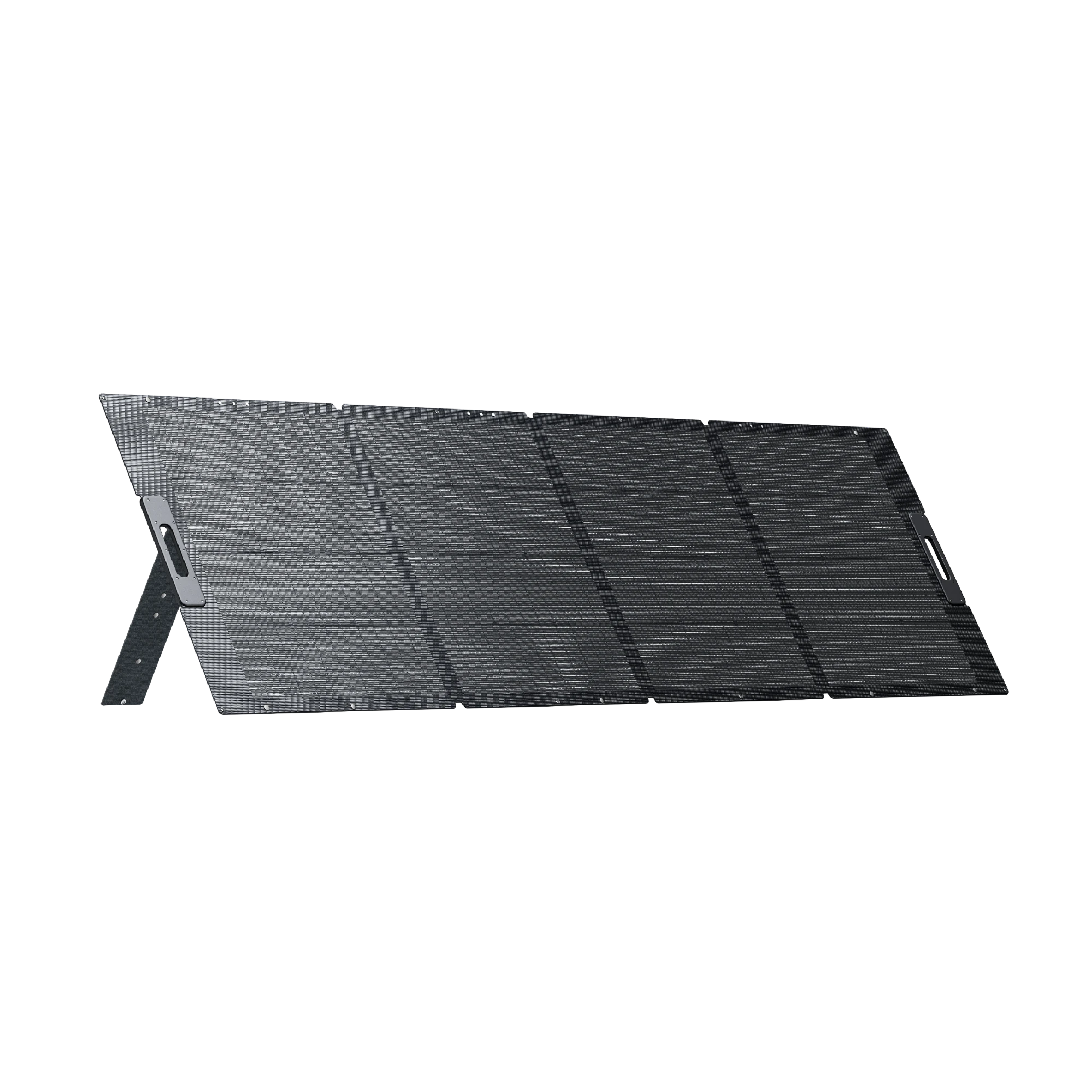
Weatherproof rigid panel for roof/ground arrays on cabins.

Current Anker ~2kWh station — fast AC+solar charge, expandable to 4kWh; direct rival to Jackery 2000 v2.
Affiliate disclosure: GetWattLogic earns a commission on purchases made through these links, at no extra cost to you.